Grout care
How often should grout be sealed in Colorado?
There’s no single answer, because it depends on how much water and traffic a surface sees. As a starting point for Front Range homes:
- Shower floors and walls: every 12–18 months.
- Kitchen floors: every 2–3 years.
- Bathroom floors: every 2–3 years.
- Entryways and mudrooms: every 1–2 years, because of winter de-icer and grit.
- Backsplashes: every 3–5 years.
- Color-sealed grout: rarely needs re-sealing; a touch-up every 5+ years is typical.
The water-drop test
Put a few drops of water on a grout line and wait five minutes. If the grout darkens, water is soaking in and the sealer has worn off. If the water beads or stays on top, it’s still protected. Test the busiest spots — in front of the sink, the shower floor, the doorway.
Always deep clean before sealing. Sealing dirty grout locks the dirt in for years.
Natural stone
Cleaners that quietly damage marble and travertine
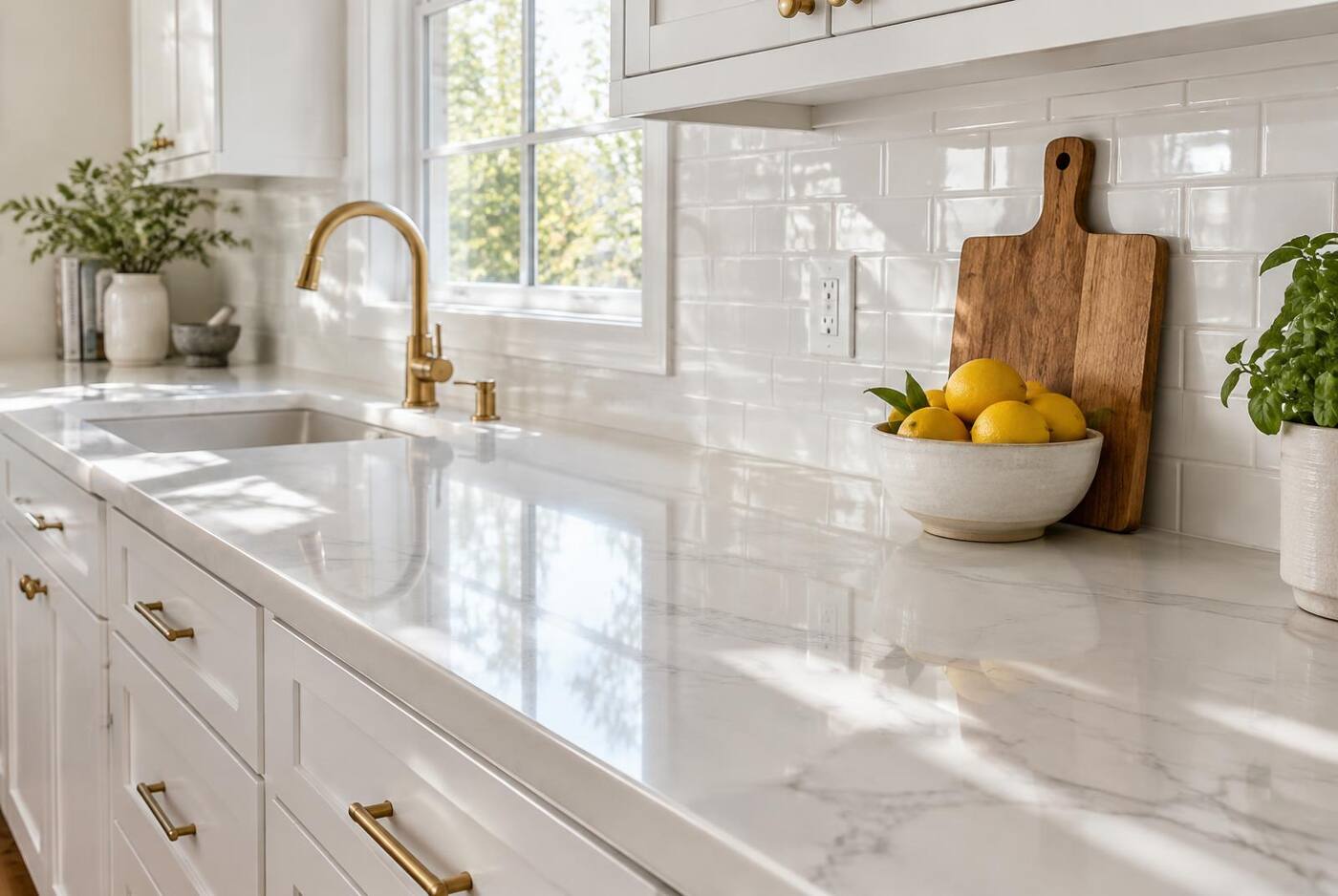
Marble, travertine, limestone and onyx are calcium-based stones. Acids react with them chemically and leave dull, rough spots called etches — they look like water marks but won’t wipe away.
Avoid on calcium-based stone
- Vinegar and anything with citric acid, including “natural” lemon cleaners
- Most bathroom sprays, tub-and-tile cleaners and lime/scale removers
- Disinfecting wipes used daily (many contain acids or leave residue)
- Abrasive powders and scrub sponges
Safe choices
- A pH-neutral cleaner labelled for natural stone, or warm water with a drop of mild dish soap
- Soft microfiber cloths and mops
- Wiping up wine, juice, coffee, tomato and cleaning sprays straight away
Granite and quartzite are more resistant to acid, but harsh cleaners still strip their sealer over time. Engineered quartz tolerates most household cleaners, but avoid oven cleaner, bleach left to sit, and high heat.
Showers
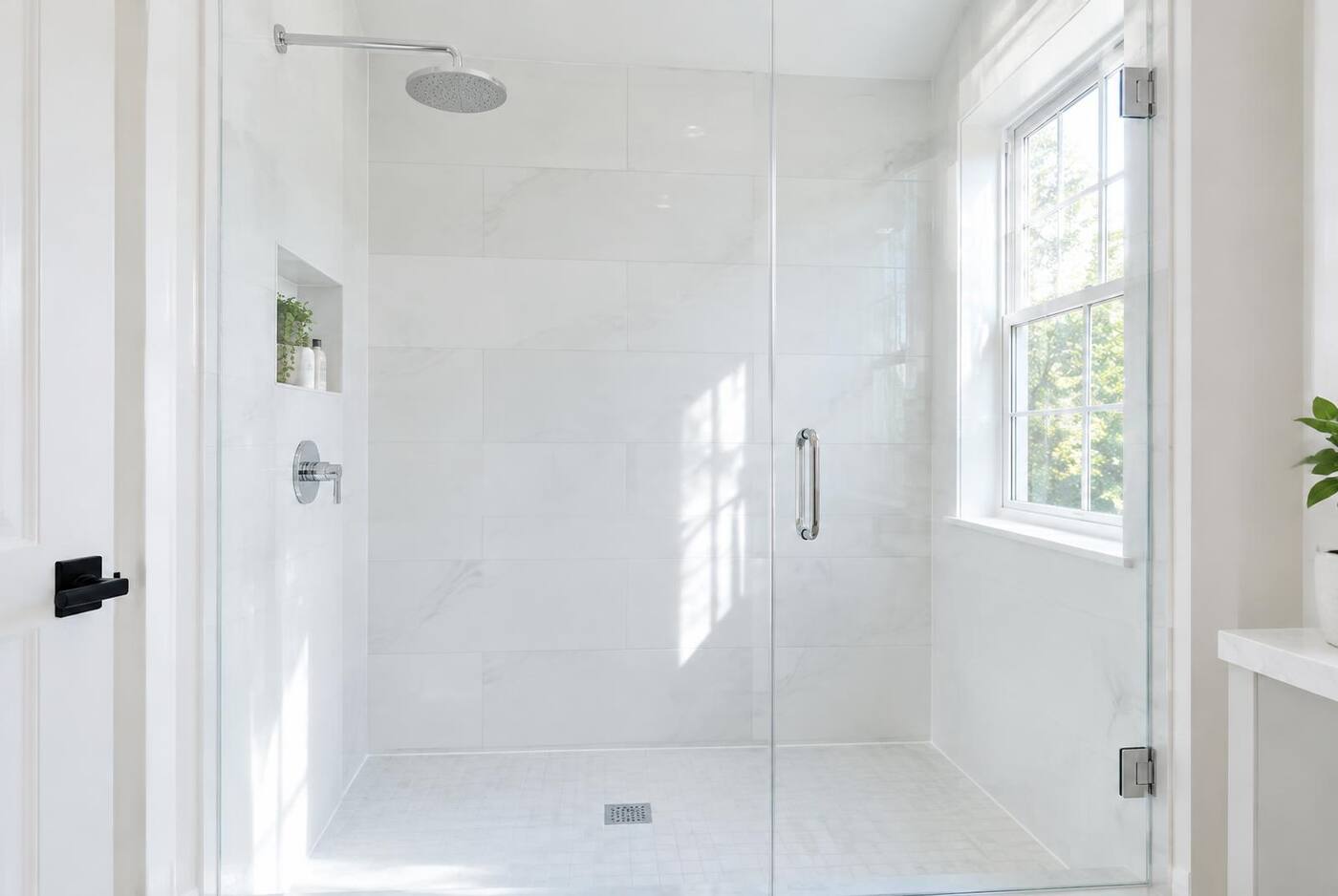
Hard water spots on tile and glass: a 10-minute weekly routine
Hard water leaves calcium and magnesium behind when it evaporates. In a shower, that mineral layer mixes with soap and body oils to form the grey film that makes tile look dull no matter how often it’s scrubbed.
Daily (30 seconds)
- Squeegee glass and tile walls after the last shower of the day.
- Leave the door or curtain open and run the fan for 20 minutes.
Weekly (10 minutes)
- Spray a cleaner that’s safe for your surface — pH-neutral if your shower has any natural stone.
- Wipe with a soft brush or non-scratch pad, paying attention to the lower third of the walls and the corners.
- Rinse with warm water and dry the glass.
If film has built up for months, a professional restoration resets the surface; after that, this routine keeps it under control.
Showers
Why shower caulk turns black — and when to replace it
Caulk sits where water collects: the corners of the shower, the joint between tub and tile, around the base of the glass. Even mildew-resistant silicone eventually gets mildew growing into it, not just on it. Once that happens, surface cleaning can’t bring it back.
Signs it’s time to replace
- Dark spots that return within a week of cleaning
- Caulk peeling away from the tile or tub
- Gaps, cracks or hardened sections
- Any joint where water seems to sit
Proper re-caulking means removing all the old material, cleaning and fully drying the joint, then applying new silicone — not adding a new bead on top of the old one, which traps moisture.
Floors
Protecting entryway tile from Colorado winters
Snow melt, gravel and magnesium chloride de-icer are hard on tile and stone. The salts leave a white haze and slowly dull grout and soft stone.
- Use two mats — a coarse one outside, an absorbent one inside.
- Damp-mop entryways weekly in winter with warm water and a neutral cleaner to dissolve salt residue.
- Keep grout sealed: aim to re-seal entry grout every 1–2 years.
- Sweep or vacuum grit daily during snowy weeks — it acts like sandpaper on polished stone.